Virtual Boy
- This article is about the tabletop video game system. For the application for Nintendo Switch and Nintendo Switch 2, see Virtual Boy - Nintendo Classics.
- "VB" redirects here. For the device in Luigi's Mansion 3, see Virtual Boo.
| Virtual Boy | |
|---|---|
 Official logo  The Virtual Boy console and controller | |
| Generation | Fifth generation |
| Release dates |  July 21, 1995[1] July 21, 1995[1] August 14, 1995[2] August 14, 1995[2] September 18, 1995[3] September 18, 1995[3] |
| Discontinued | December 22, 1995[1] August 1996[1] |
| Predecessor | Game Boy |
- “We saw the future, and it was black and red.”
- —Official Nintendo Magazine
The Virtual Boy is a 32-bit tabletop video game system developed by Nintendo and released in 1995. It consists of a red box on a mountable stand, with a black visor into which the player peers to view and play games. It was developed by Nintendo R&D1 and was led by Gunpei Yokoi, together with the US-based Reflection Technology, Inc., with development of the system spanning over three-and-a-half years.[4]
The Virtual Boy displays game visuals in 3D using stereoscopy. Images on the system are produced via two vertical arrays of LEDs, one per eye, which are rapidly scanned across the user's field of view with oscillating mirrors; this creates a stable image with a perceived effect of depth. Red LEDs were chosen due to their lower cost, creating the unique red-and-black color scheme associated with the system. Though the Virtual Boy is not true virtual reality, it was codenamed "VR32", and marketed as a virtual reality game system by Nintendo.[1] All official Virtual Boy games feature an optional automatic-pause feature, which prompts the player to take a break every 15–30 minutes.
As development on the Nintendo 64 was incomplete in the mid-1990s, the Virtual Boy was rushed to completion in order to fill the gap between it and their previous systems.[1] The Virtual Boy was released in Japan and the Americas in mid-1995, with Mario's Tennis included as a pack-in game in the latter region. In the end, the system was a critical and commercial failure, being panned for its high price point, stark red visuals in lieu of a full-color display, and awkward form factor; headaches and eye strain were often-cited symptoms purported by some of those who played the system.[4]
Only 22 game titles in total were released commercially for the Virtual Boy, with several other games canceled, and the system was discontinued shortly after launch. Plans for a link cable accessory, which would have enabled multiplayer functionality, were also shelved. Of 800,000 units shipped, only 770,000 were sold, making it Nintendo's least successful video game system. Due to these factors, the Virtual Boy was never released in Europe, Oceania, or Asian countries aside from Japan. In the years since, the Virtual Boy has been honored and referenced (sometimes jokingly) in several Nintendo games, including some in the Super Mario franchise. Nintendo would later achieve success with a stereoscopic 3D system in 2011 with the Nintendo 3DS.[4]
On February 17, 2026, Nintendo released the Virtual Boy - Nintendo Classics application on Nintendo Switch and Nintendo Switch 2, exclusively for Nintendo Switch Online + Expansion Pack subscribers.[5] Alongside it, two accessories were launched on the My Nintendo Store for Nintendo Switch Online subscribers: a full-scale replica of the Virtual Boy hardware, and a cardboard accessory similar to the Nintendo Labo Toy-Con VR Goggles, both allowing for 3D visuals to be viewed on the user's system. Officially, one of these two accessories is required to use the application (with 2D display not supported), though the original Toy-Con VR Goggles themselves can also be used on Nintendo Switch despite this. Virtual Boy Wario Land was made available at the app's launch, with Mario's Tennis and Mario Clash being added the following month. The application was announced in a Nintendo Direct on September 12, 2025.[6]
Controller[edit]

The Virtual Boy's controller features dual +Control Pads ( ), and four face buttons in a symmetrical layout (two on each side):
  ,
,  ,
,  , and
, and  . Two round shoulder buttons,
  and
and  , can be found on the back directly behind the +Control Pads. The controller also acts as the Virtual Boy's power source, with either a battery pack or AC adapter able to be slotted into its back; the system's power switch is also found on the front of the controller.
While some Virtual Boy games assign different controls to either +Control Pad, such as Mario Clash, most games give both pads the same functionality.
Super Mario games on the Virtual Boy[edit]
Released[edit]
Canceled[edit]
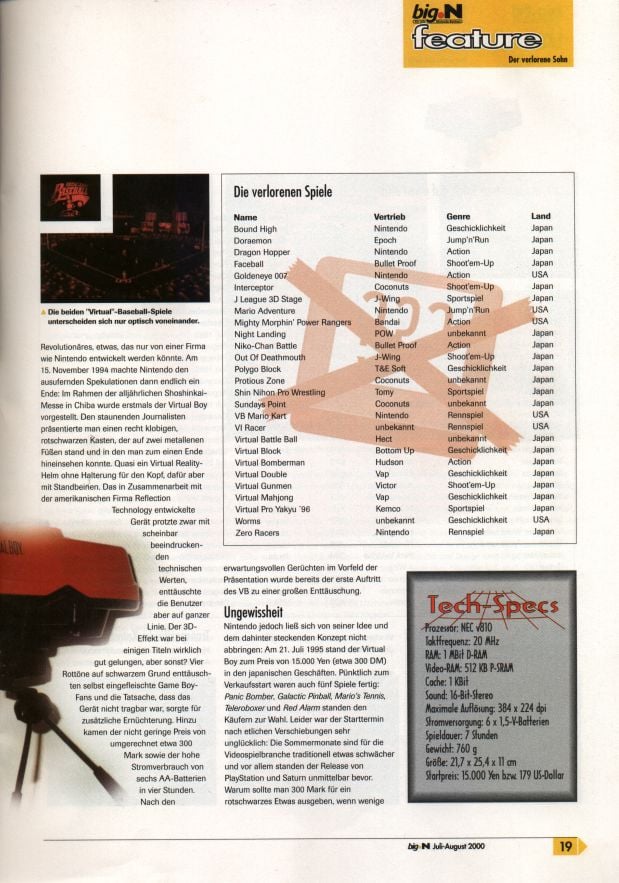
The German magazine Big N claimed that a Virtual Boy installment of the Mario Kart series, tentatively named VB Mario Kart, was in development.[7] The only known media report of it is Big N's August 2000 issue, which listed it among various other canceled Virtual Boy projects.
Tech demos[edit]

A proof-of-concept for a Donkey Kong Country title was made for the Virtual Boy.[8] While a quote from Leigh Loveday on Rare's Scribes mailbag referred to it as a Virtual Boy port of Donkey Kong Country 2: Diddy's Kong Quest,[9] various subsequent statements by employees involved on the project, most notably Paul Machacek, clarified that were no concrete plans for Donkey Kong Country game on the system and that what Loveday referred to was a short demo to test the capabilities of the Virtual Boy.[8] Speaking of the demo, Machacek stated:
I did it for 3 months & was cross-eyed with headaches by the end. I implemented a simple horizontally scrolling jungle background with split-level platforms & DK running around "being DK". All art was pre-rendered and lifted from DKC. [...] We only ever got something running against a jungle background on VB & whilst that art had been lifted from DKC it had already gone through some “monochroming” for DKL on gameboy which seemed a more apt place to directly take monochrome art from [...] We never got a full playable level working. Merely a short side scrolling split-level jungle background with DK walking/running/jumping on it. There were some rats running about as well (which i lifted from a GB Battletoads game!) Enjoy[sic] ...imagine these images in various shades of red with some rats running around DK. That's pretty much what it looked like. While i could see. Honestly that thing gave me neck-ache as well come to think of it.
Work on the demo ended and no plan for a full-blown game was developed after it became obvious that the Virtual Boy was a commercial failure.[8]
Production[edit]

When Gunpei Yokoi first had the idea of a Virtual Reality gaming console, he referred to it as "Virtual Utopia Experience".[10] However, Argonaut was working on an advanced virtual reality gaming system called the "Super Visor" for Nintendo, which Yokoi canceled in favor of his own idea.[11] The first concept drawings showed the possibilities of 3D images by displaying two slightly different images using mirrors. During development, the system was codenamed "VR32", meaning "Virtual Reality 32-bit". The early patents of VR32 were made public in 1994, with diagrams showing that the controller was originally going to have three buttons on the right, near the D-Pad. The system was officially announced at the Japan Shoshinkai event on November 15 and 16, 1994[12], where it was first known as "Virtual Boy". The prototype which was unveiled differed from the final version, as the system was colored blue and red, and the blue controller had multicolored buttons. It looked very similar to the future Nintendo GameCube controller. The public were shown how each lens displayed a different image, giving the impression of "True 3D".
Several different pre-production models were later created in Japan, sharing characteristics of both the first prototypes as well as the final design. The plastic was more smooth than the final, and without any writings engraved in it. The adjustment knobs on top are black instead of gray, and the controller reached its final design. North America soon got its own pre-production model. These had the Virtual Boy logo on the side of the system, and the logo on the controller is a bit thicker than on retail units. These pre-production models were given to Nintendo of America's game testers to review Virtual Boy games, and the testers were later allowed to take them home.[13]
Appearances in the Super Mario franchise[edit]
Super Mario-kun[edit]

In chapter 5 of volume 13, Mario is running from Bowser's Minions in Morton's mall and trips, getting a Virtual Boy stuck to his face. Taking advantage of this, Morton makes him attack his friends whom he believes to be enemies and avoid obstacles that are not there. Panicked, Mario swings his hammer left and right until he hits some Bob-ombs, blowing up the entire mall.
Super Smash Bros. series[edit]
Super Smash Bros. Melee[edit]
A Virtual Boy appears in the shelf, in the room where all trophies are kept. Although the Virtual Boy only appears in the Japanese version of the game, the player can still see it by setting the language to Japanese in the North American version of the game.
Super Smash Bros. for Wii U and Super Smash Bros. Ultimate[edit]

In the stage Gamer, based on the minigame of the same name in Game & Wario, the same Virtual Boy can be seen next to the television.
WarioWare series[edit]
WarioWare: Smooth Moves[edit]
A Virtual Boy appears in Level 3 of the Sifty Character microgame.
Game & Wario[edit]
In the minigame Gamer, 9-Volt has a Virtual Boy in his room, next to the television. In WarioWare Gold, Sneaky Gamer has a Wii U instead of the Virtual Boy.
WarioWare Gold[edit]
The Virtual Boy appears as a collectible Nintendo souvenir.
Super Paper Mario[edit]

Francis has a Virtual Boy in his room, where he also keeps other various Nintendo consoles.
Mario & Luigi: Superstar Saga + Bowser's Minions[edit]

The Special Item accessory Secret Specs sprite is designed after the Virtual Boy.
Luigi's Mansion 3[edit]
Another invention by Professor E. Gadd introduced in the game is the Virtual Boo ("VB" for short), a communication device based on the Virtual Boy that replaces the Game Boy Horror and Dual Scream from previous installments. When E. Gadd gives it to Luigi, he mentions that he plans on selling it and claims that it will "fly off the shelves," a joking reference to the Virtual Boy's commercial failure.[14]
Gallery[edit]
Logos[edit]

The logo used on the Japanese box arts

The logo used on the North American box arts

Game start-up logo, seen in most games

"VR32" codename logo

1994 early logo

1995 early logo


System[edit]
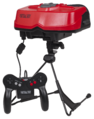
System
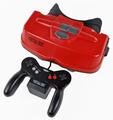
System
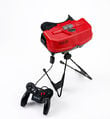
System
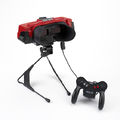
System
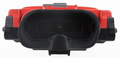
Close up of visor
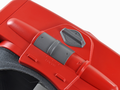
Close up of focus adjust
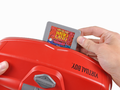
A Virtual Boy Wario Land cartridge being inserted into the system
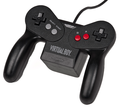
Controller
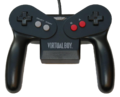
Controller


System box[edit]
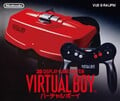
Japanese box art
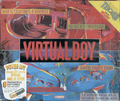
North American box art
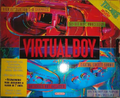
Brazilian box art

Prototype box art


Super Mario games[edit]


Screenshots[edit]
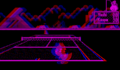
Screenshot with anaglyph effects added, showcasing the two images which create the console's 3D effect

Promotional artwork[edit]
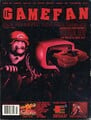
Cover of a Gamefan Magazine, showing Mario with the Virtual Boy


Early design[edit]
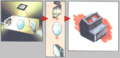
First concept drawings (1993)
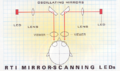
Basic design of how the 3D images were to be displayed
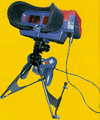
Early system design; Shoshinkai 1994
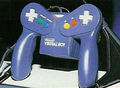
Early controller design, with a similar casing to a default GameCube controller; Shoshinkai 1994
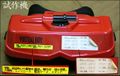
Pre-production system design

Pre-production controller design
![An early version of the console's boot sequence showcased at Shoshinkai 1994, featuring Mario[15]](https://mario.wiki.gallery/images/thumb/e/e5/Mariodemo.png/120px-Mariodemo.png)
An early version of the console's boot sequence showcased at Shoshinkai 1994, featuring Mario[15]


![An early version of the console's boot sequence showcased at Shoshinkai 1994, featuring Mario[15]](/File:Mariodemo.png)
Names in other languages[edit]
| Language | Name | Meaning | Note(s) | Ref. |
|---|---|---|---|---|
| Japanese | バーチャルボーイ Bācharu Bōi |
Virtual Boy | [16] | |
| Portuguese | Virtual Boy | - | [17] |
References[edit]
- ^ a b c d e Edwards, Benj (August 21, 2015). Unraveling The Enigma Of Nintendo's Virtual Boy, 20 Years Later. Retrieved February 8, 2026 from Fast Company. (Archived February 20, 2023 via Wayback Machine.)
- ^ May 11, 1995. VIRTUAL BOY LAUNCH DATE ANNOUNCED. Nintendo of America. Retrieved December 19, 2024.
- ^ Sposito, Rosa (September 18, 1995). Virtual Boy oferece jogos com imagens em 3 dimensões (requires log in). O Estado de S. Paulo (Brazilian Portuguese). Page 54. Retrieved February 15, 2026.
- ^ a b c DidYouKnowGaming (June 22, 2025). Virtual Boy: NOT Nintendo's Biggest Failure. YouTube.
- ^ Nintendo UK (January 27, 2026). Virtual Boy – Nintendo Classics – Introducing games and features. YouTube.
- ^ Nintendo of America (September 12, 2025). Virtual Boy – Nintendo Classics – Nintendo Direct 9.12.2025. YouTube.
- ^ Big N magazine (Germany), July-August 2000, pg. 19
- ^ a b c Cameron. "Red Dead Reflection". DK Vine. Retrieved October 16, 2020
- ^ August 10 2001 Scribes mailbag. Rarewhere. Retrieved October 16, 2020
- ^ Virtual Utopia Experience
- ^ Hamill, Jasper (September 26, 2018). Secrets of lost Nintendo console revealed by British gaming pioneer who led its design. Metro (retrieved June 4, 2019).
- ^ Nintendo Power, issue #68, January 1995, pg. 52
- ^ Pre-Production Model (USA)
- ^ GameXplain (October 16, 2019). Luigi's Mansion 3 Has a Virtual Boy Spoof + Joke. YouTube. Retrieved October 16, 2019.
- ^ Virtual Boy Prototype Mario Intro. Planet Virtual Boy. Retrieved November 5, 2025.
- ^ Japanese box art
- ^ Brazilian box art
External links[edit]


| Virtual Boy games | |
|---|---|
| Super Mario franchise | Mario's Tennis (1995) • Mario Clash (1995) • VB Mario Land (canceled) • VB Mario Kart (canceled) |
| Donkey Kong franchise | Unnamed Donkey Kong Country proof-of-concept (tech demo) |
| Wario franchise | Virtual Boy Wario Land (1995) |