Super Mario Bros. (Valiant Comics)
| Super Mario Bros. | |
|---|---|
 Cover of the Super Mario Bros. No. 1 heavy stock issue | |
| Writer | Various |
| Artist | Various |
| Publishers |  Valiant Comics[1][2] Valiant Comics[1][2] Condor-Verlagsgruppe[3] Condor-Verlagsgruppe[3] Multi Editora[4] Multi Editora[4] Glénat[5] Glénat[5] |
| Label | Nintendo Comics System[1][2] |
| Original language | English |
| Translations | Danish[A] Finnish[B] French (Europe) German Norwegian[A] Portuguese (Brazil) Swedish[A] |
| Issues | 22 (21 original, 1 unreleased) 13 13 13 13 4 17 13 4 17 |
| Release dates | January 1, 1990–October 1991[1][2] 1991–1993[3][6] 1991–1993[3][6] 1991–1993[3][6] 1991[4] 1992–1994[5] |
Super Mario Bros. is a comic series featured as part of Valiant Comics' Nintendo Comics System brand. Running from January 1, 1990 to October 1991,[1][2] the comics include stories based on the Super Mario franchise. Of all of the properties featured under the Nintendo Comics System brand, Super Mario Bros. was the most prolific and the longest-running.
Overview[edit]
The premise of the Super Mario Bros. comics, set up by the introductory comic "The Legend", follows the basic plot of Super Mario Bros.: the peaceful Mushroom Kingdom is invaded by King Koopa and his army. Hearing the inhabitants' cries for help, two Italian-American plumbers named Mario and Luigi, who run a plumbing business in Brooklyn, New York named "Mario Bros. Plumbing", set out for adventure, defeating King Koopa and restoring the kidnapped King Toadstool and Princess Toadstool to the throne. Hailed as heroes by the Mushroom Kingdom's inhabitants, Mario and Luigi decide to stay as the kingdom's protectors, knowing that King Koopa will not admit defeat.
From there, the comics have no overarching storyline, and are primarily episodic in nature. The comics feature Mario, Luigi, Toadstool, and Toad foiling plots of King Koopa and other villains to conquer the kingdom (often involving kidnapping the scatterbrained and dimwitted King Toadstool or the Princess), and sometimes getting into mischief during their downtime. Comics are generally comedic in nature, in contrast to most of the comics featured under the Nintendo Comics System label, with plots such as King Koopa developing a bomb that makes all those who inhale its fumes dimwitted, or Luigi and Toad participating in a bowling tournament played with oversized meatballs; humor in the form of visual gags and puns is also present. Additionally, like The Super Mario Bros. Super Show!, which aired around the same time as the comics' run, the comics feature references to American pop culture, though not as much as The Super Mario Bros. Super Show!, which primarily revolved around parodies of books, films, or historical events. The comics primarily draw on the characters and settings of the Super Mario platformers Super Mario Bros., Super Mario Bros. 2, and Super Mario Bros. 3 which released in the United States around time of the comics' run. In addition to including characters from the games, the comic's cast is also rounded by several original characters, including the king's beleaguered advisor Wooster, the neurotic lovestruck Stanley the Talking Fish, and Mario's superhero idol Dirk Drain-Head.
Most of the regular comics are ten pages long, with the exception of "The Fish That Should've Gotten Away", which is only four pages long, and "The Legend", which is only two pages long. The regular comics are broken up by one-off pages featuring pin-ups, exposition, visual humor, and insight about the comic's characters.
Publication history[edit]

According to an info page in Nintendo Comics System No. 1, Valiant's deal with Nintendo was announced at a January 1989 conference in New York. Artists drew the story "The Fish That Should've Gotten Away" live for the press, making it the first comic produced for the line.[7]
On January 1, 1990, an 8-page sneak preview featuring various pages from the upcoming comics and ultimately unused art was published.[1] This was the first comic issue to be published by Valiant, predating the company's wrestling and self-owned superhero titles.[citation needed]
The Super Mario Bros. comics were first published in 1990 as heavy stock under the label Super Mario Bros., which lasted for six issues, debuting with its first issue, Super Mario Bros. Special Edition No. 1.[8][9] These issues are staple-bound and use the classic Super Mario font for writing Super Mario Bros. The front covers of the issues also list a price of $1.95 and CAN $2.50 with the exception of Super Mario Bros. Special Edition No. 1, which only lists a price of $1.95. The version concluded with its sixth issue, Super Mario Bros. No. 6. A seventh issue, Super Mario Bros. No. 7, was also planned to be released, but this ultimately never came to fruition.
Starting in February 1991, the comics switched to a soft cover format, which was published monthly. This version lasted for five issues, and it debuted with its first issue, Super Mario Bros. No. 1.[2] At the same time, the comics were also published under the label Adventures of the Super Mario Bros., also in a soft cover format. This label also featured stories from the Captain N comic series and lasted for nine issues, debuting with its first issue, Adventures of the Super Mario Bros. No. 1. While the soft cover issues of Super Mario Bros. continue using the classic Super Mario typeface for writing Super Mario Bros. like its heavy stock incarnation, the Adventures of the Super Mario Bros. issues instead use the typeface from the in-game logo of the game Super Mario Bros. The front covers of the issues also now feature the month the issue was released along with the price, and have a price of $1.50 and CAN $1.95 as opposed to the heavy stock's $1.95 and CAN $2.50. The soft cover version of Super Mario Bros. concluded with its fifth issue, Super Mario Bros. No. 5, in June 1991,[10] while Adventures of the Super Mario Bros. concluded with its ninth issue, Adventures of the Super Mario Bros. No. 9, in October 1991.[2] Adventures of the Super Mario Bros. No. 9 was the last Super Mario issue to be published under the Nintendo Comics System label, with no more Super Mario issues published under the label.
The Super Mario Bros. comics were also published under the Nintendo Comics System label, which featured comics from other Nintendo Comics System comic series such as The Legend of Zelda, Punch-Out!!, and Captain N. The comics were also featured as part of the fifth, sixth, eighth, and ninth issues of the Nintendo Comics System featuring... comic series, which featured comics from a certain comic series of the Nintendo Comics System, mainly Game Boy and Super Mario Bros.
Several hardcover collections of the Super Mario Bros. comics were also published. The Best of the Super Mario Bros., published on September 16, 1990,[11] contains most comics under this label, though The Best of the Nintendo Comics System features the comic "Just Deserts". Several issues of the Valiant Illustrated Action Books series were also published, including Super Mario Bros.: Meet the Koopa Kids, Super Mario Bros.: Battle Against Bowser, and Super Mario Bros.: Mario's Special Powers, all published in 1991.[12][13][14] Super Mario Bros.: Mario's Special Powers also features an original story not published in any other issue, "Tanooki Suits Me".
Additionally, a hardcover collection by Random House was published in 1991.[15] This collection comes with an audio cassette that features voice acting for the characters and narration.
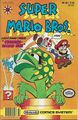
Cover of the Super Mario Bros. No. 1 soft cover issue


Characters[edit]
| Name | Description |
|---|---|
 Mario |
Mario is the main protagonist of the Super Mario franchise. Along with his brother Luigi, they work together to foil the plans of the evil King Koopa. In the comics, Mario is obsessed with reading Dirk Drain-Head, a plumbing superhero who is his idol. |
 Luigi |
Luigi is Mario's younger but taller brother. He, along with Mario, works together to foil the plans of the evil King Koopa. |
 Princess Toadtsool |
Princess Toadstool is the de facto ruler of the Mushroom Kingdom. While her father King Toadstool is the de jure ruler, he is scatterbrained and dimwitted, so she often performs his royal duties as in his stead. In the comics, she is shown to be fan of the comic Baroness Blue Blood. |
 Toad |
Toad is the main page of Princess Toadstool, the de facto ruler of the Mushroom Kingdom. He is also seen helping Mario and Luigi foil the plans of the evil King Koopa. |
 King Toadstool |
King Toadstool is the de jure ruler of the Mushroom Kingdom. Despite this, he is depicted as scatterbrained and dimwitted, so his responsible daugher Princess Toadstool performs his royal duties as the de facto ruler. Wooster, the king's personal servant, is occasionally at odds with him due to his lack of intelligence. |
 Wooster |
Wooster is King Toadstool's chief adviser, worrying a lot about him. He is very polite and helpful, but can occasionally be irritated by him due to his lack of intelligence. |
 King Koopa |
King Koopa is the main antagonist of the Super Mario franchise. In the comic, he is often seen trying to take over the Mushroom Kingdom or cause trouble for Mario and his friends. He is the apparent owner of the Apook Corporation, a corporate conglomerate that sells products to most of the Mushroom Kingdom. |
Comics[edit]
Original[edit]
German-exclusive[edit]
Unreleased[edit]
| Comic | Published in | Pages |
|---|---|---|
| "20,000 Villains Under the Sea" | Super Mario Bros. No. 7 | Unknown |
| "Have An Ice Day" | Unnkown | 10 |
| "King's Busy Day" | Unknown | 1 |
| "Water Friends For" | Unknown | 10 |
Releases[edit]

- Main article: List of Super Mario Bros. (Valiant Comics) releases
There are a total of 70 releases of the Super Mario Bros. comics, 72 if including Nintendo Comics System: Sneak Preview! and Super Mario Bros. Special Edition No. 1. Of these releases, 33 of the releases are for the original version of the comic, while 39 of the releases are for the foreign versions of the comics. Of the 33 releases of the original version of the comic, six are the heavy stock issues of the comics, while fourteen are the soft cover issues of the comics. Of the fourteen soft cover issues, five are labeled under the Super Mario Bros. title, while nine are labeled under the Adventures of the Super Mario Bros. title.
Three hardcover collections were released for the comics: The Best of the Nintendo Comics System, The Best of the Super Mario Bros., and Super Mario Bros. Adventures. Three Valiant Illustrated Action Books were also released, namely Super Mario Bros.: Meet the Koopa Kids, Super Mario Bros.: Battle Against Bowser, and Super Mario Bros.: Mario's Special Powers.
The remaining seven releases are Nintendo Comics System issues that feature Super Mario Bros. comics alongside other comics under the label. Three are the Nintendo Comics System issues, which includes Nintendo Comics System: Sneak Preview!, a sneak preview of upcoming comics that would be featured under the label. The remaining four releases are the Nintendo Comics System featuring... issues which feature the Super Mario Bros. comics as the main focus of the issue; the issues that feature the Super Mario Bros. comics include Nintendo Comics System featuring Super Mario Bros. No. 5, Nintendo Comics System featuring Super Mario Bros. No. 6, Nintendo Comics System featuring Super Mario Bros. No. 8, and Nintendo Comics System featuring Super Mario Bros. No. 9.
Of the 39 foreign releases of the comics, four are the issues of the Brazilian Portuguese version of the comics, Super Mario Bros. em Quadrinhos, seventeen are the issues of the French version of the comics, Super Mario, and 13 are the issues of the German version of the comics, Super Mario Bros. Video-Comic-Magazin. The French version also includes a hardcover collection, Super Mario Bros., which includes all of the comics featured in the first four issues of the version.
A seventh issue of the heavy stock version of the Super Mario Bros. comics, Super Mario Bros. No. 7, was also planned to be released, but this ultimately never came to fruition.
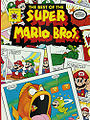
Cover of The Best of the Super Mario Bros.


Staff[edit]
- Main article: List of Super Mario Bros. (Valiant Comics) staff
Super Mario Bros. had a highly variable stable of writers and artists, leading to a somewhat inconsistent visual style. Some recurring writers and a: rtists include George Caragonne, Janet Jackson, Ken Lopez, Mark McClellan, Art Nichols, Bill Valely, John Walker, and P. Zorito.
Pre-release and unused content[edit]
This section needs Super Mario Bros. (Valiant Comics) improvement. Specifically:
- Add descriptions for all of the comics.

- Several Super Mario Bros. comics that were in production but were ultimately never released include the following:
- "20,000 Villains Under the Sea": This comic was to be published in the unreleased Super Mario Bros. No. 7.
- "Have An Ice Day"
- "King's Busy Day"
- "Water Friends For"
- Additionally, in Game Boy No. 3 and No. 4 of Game Boy, what appears to be an unused comic featuring Mario entering an Airship to retrieve Wendy's magic wand appears in an advertisement for the Nintendo Comics System. In the comic, Mario is seen jumping into a Warp Pipe leading into the interior of the Airship, with him commenting that it is clearly not the love boat. Landing inside the airship, Mario demands Wendy to hand over her wand to him, with her frustrated with his return. With her in refusal, Mario decides to take the wand from her the hard way, with Wendy in shock. The scene of Mario entering the inside of the Airship through the Warp Pipe as Wendy spots him is also used as the basis for the cover art of the Valiant Illustrated Action Book Super Mario Bros.: Meet the Koopa Kids.
References to other media[edit]
- The Super Mario Bros. comics feature many enemies and bosses that primarily appear in Yume Kōjō: Doki Doki Panic and Super Mario Bros. 2, including Shy Guys and Wart. Many of the bosses that appear in the game are broadened as a species, with multiple Mousers, Fryguys, and Clawgrips appearing in the comic series. World 1-1 and World 5-1 also appear in the comic, appearing in "You Again?" and "The Adventures of Dirk Drain-Head", respectively.
- In the comic "Cloud Nine", Wart is the owner of Snooze World, a mattress store, which is a homage to Subcon, which he attempts to conquer during the events of Yume Kōjō: Doki Doki Panic and Super Mario Bros. 2.
- A Mask Gate appears in the comic "The Adventures of Dirk Drain-Head". It also appears on the covers of Adventures of the Super Mario Bros. No. 3 and Super Mario Bros. Video-Comic-Magazin Nr. 6.
- A Cherry appears in the comic "Elect Mario for Man of the Year".
- Due to Super Mario Bros. comics' run being around the same time as The Super Mario Bros. Super Show!, several references to the show appear throughout the comic:
- King Koopa's design is mainly taken from his appearance in The Super Mario Bros. Super Show!, based on his in-game appearance in Super Mario Bros. and Wart's appearance in Super Mario Bros. 2. The exception is in "Just Deserts", where he is drawn more faithfully to his modern design, though he still retains his mainly green color scheme from the show and wears a crown. The Trouters' design and behavior are also taken from the show.
- Mario Bros. Plumbing, which first appears in The Super Mario Bros. Super Show!, reappears in "The Legend". It is also the main setting for the German-exclusive stories of the Super Mario Bros. comics, with these stories being analogous to the live-action segments of the show.
- In "Beauty and the Beach", Mario is the owner of a sailboat named The Spirit of Flatbush, alluding to Mario and Luigi's hometown of Flatbush in the show.
- All of the German-exclusive stories of the Super Mario Bros. comics are all formatted as Plumber's Log entries, marking the log's first appearance after originally quoted from at the beginning of every cartoon episode of The Super Mario Bros. Super Show!
- In "Die Mario-Brüder und der Super-Sauger", while being forced to use the Super-Sauger on a sewer by Shredder, Mario explains that he and Luigi need a twenty-minute break, as their show, The Super Mario Bros. Show! begins now, before explaining the general format of an episode for the show. Later, at the end of the story, the narrator mentions that them taking their break not only meant that their second appearance on the show was a success, but was also a rescue for the Teenage Mutant Ninja Turtles.
- Additionally, the show is also alluded to on the cover of every issue except the first issue, where a caption mentions that the Super Mario Bros. comic series is an extension of the game Super Mario Bros. and The Super Mario Bros. Super Show!
- One of Stanley the Talking Fish's girlfriends, Bertha, is a reference to "Big Bertha", one of the original names for the Big Cheep Cheep.
- The cover of Super Mario Bros. Video-Comic-Magazin Nr. 12 features Cape Mario and Yoshi, who originated from this game.
References in later media[edit]
- The cover of Super Mario Bros.: Libro para colorear uses the opening panel from the comic "Cloud Nine".
- The scene where the Mario Bros., the Princess, Wooster, the Shyguys, and the Beezos leave the Mushroom Castle and enter the Mask Gate to Koopa's castle is reused as part of the cover art for The Super Mario Bros. Super Show! Taiwanese VHSes Chāojí Mario 5: Mario Dàzhàn Koopa and Chāojí Mario 9: Mógu Kāiguóshǐ.
- The back cover of Super Mario's Adventures features Wart chasing Mario with the design he has in this series, but recolored to resemble Bowser.
Gallery[edit]
- For this subject's image gallery, see Gallery:Super Mario Bros. (Valiant Comics).
Translations[edit]

The Super Mario Bros. comic series was translated into French, German, and Brazilian Portuguese, under the titles Super Mario (originally Le Journal Nintendo), Super Mario Bros. Video-Comic-Magazin (originally Super Mario Bros. Comic-Magazin), and Super Mario Bros. em Quadrinhos, respectively. The French version of the comics, Super Mario, was the longest running foreign version of the Super Mario Bros. comic series, running for seventeen issues and first published by Éditions de Tournon in 1992.[5] The first two issues only featured Super Mario Bros. comics, though starting with the third issue the version also included the Game Boy comics. The version was originally released under the Le Journal Nintendo, which remained the version's title until the seventh issue, where the version was retitled Super Mario, which remained for the rest of the version's run. The version also began featuring comics from The Legend of Zelda from this issue onward. The comics featured in the first four issues of Le Journal Nintendo were later compiled in the book Super Mario Bros., released by Glénat in 1992 under the Comics USA label.[16] Each issue of Super Mario includes one or two full stories from the original version of the comic series. With the exception of "The Legend", the short stories appearing in the original version of the comic series do not appear in any issue of the French version.
The German version of the Super Mario Bros. comic series, the Super Mario Bros. Video-Comic-Magazin, was the second-longest foreign version of the comic series, running for thirteen issues and published by Condor-Verlagsgruppe from 1991 to 1993.[3][6] The first five issues consisted only of Super Mario Bros. comics. However, starting from the sixth issue, comics from The Legend of Zelda comic series were also included, with comics from Captain N: The Game Master being included starting from the ninth issue, each given their own section in the issues. All comics in the German version were translated by Harald Seemann. All comics in the German version also take place in Videoland (the setting of Captain N: The Game Master), with notable examples such as the German title for "Public Service Announcement" ("Bekanntmachung – direcht aus dem Palace of Power", "Announcement – direct from the Palace of Power") and Wendy saying that she is an inhabitant of Videoland in "Fins and Roses". The Super Mario Bros. Video-Comic-Magazin also features several original 2-page stories not found in the original version, which include "Besuch vom anderen Stern", "Der sprechende Abfluß", "Die Mario-Brüder und der Super-Sauger", and "Die unglaubliche Erfindung", all of which are formatted as Plumber's Log entries and revolve around Mario and Luigi working at their plumbing workshop, analogous to the live-action segments of The Super Mario Bros. Super Show!
The Brazilian Portuguese version of the comic series, Super Mario Bros. em Quadrinhos, was the shortest of the foreign versions of the comic series, only running for four issues and published by Multi Editora in 1991.[4] Only Super Mario Bros. comics were included throughout the version's run, making it the only foreign version of the comic to exclusively feature Super Mario Bros. comics.
While not receiving their own comic series in these languages, Finnish, Danish, Norwegian, and Swedish translations of the Super Mario Bros. comics also appear in the Nintendo-lehti and the Nintendo-Magasinet, Nintendo's magazines for Finland and Denmark, Norway, and Sweden, respectively.
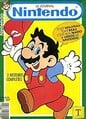
Cover of Le Journal Nintendo №1
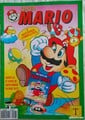
Cover of Super Mario №7


Names in other languages[edit]
| Language | Name | Meaning | Note(s) | Ref. |
|---|---|---|---|---|
| French | Super Mario | - | [17] | |
| Le Journal Nintendo | The Nintendo Magazine | first six issues | [5] | |
| German | Super Mario Bros. Video-Comic-Magazin | Super Mario Bros. Video Comic Magazine | [3] | |
| Super Mario Bros. Comic-Magazin | Super Mario Bros. Comic Magazine | first issue | [3] | |
| Portuguese (Brazilian) | Super Mario Bros. em Quadrinhos | Super Mario Bros. in Comics | [4] |
See also[edit]
Footnotes and references[edit]
Footnotes[edit]
- ^ a b c Never published as its own series; published in the Nintendo-Magasinet.
- ^ Never published as its own series; published in the Nintendo-lehti.
References[edit]
- ^ a b c d e Nintendo Comics System Sneak Preview (1990) Prices. PriceCharting. Retrieved October 7, 2025.
- ^ a b c d e f https://web.archive.org/web/20220407185406/http://catfish.it.cx/trsrockin/trsrockin.com/ncs.html
- ^ a b c d e f g Super Mario Bros. Video-Comic-Magazin
- ^ a b c d Super Mario Bros. n° 1
- ^ a b c d LE JOURNAL NINTENDO - N°1 - MENSUEL - 2 BD de Mario, jeux, .
- ^ a b c d ✪ SUPER MARIO BROS. COMIC-MAGAZIN #13, Condor/Nintendo 1993 COMICHEFT Z2
- ^ Nintendo Comics System Book Collection
- ^ Nintendo Comics System Book Collection
- ^ Nintendo Players Guide Mario Mania (1991)
- ^ 1991 Super Mario Bros #5 Nintendo Comics System Valiant Stripboek
- ^ https://www.amazon.com/Best-Super-Mario-Brothers/dp/0792455304
- ^ https://www.amazon.com/Super-Mario-Bros-Meet-Koopa/dp/0307218716
- ^ Super Mario Bros Battle Against Bowser CGC 9.6 White Pages Valiant 1991 Nintendo
- ^ https://www.amazon.com/Super-Mario-Special-Powers-Golden/dp/0307218740
- ^ Super Mario Bros. Nintendo COMIC BOOK & CASSETTE NEW IN Plastic
- ^ Bd super mario bros Nintendo numéro 1
- ^ Super Mario magazine n°7 bd Mario et Zelda
External links[edit]
- Nintendo Comics System at TRS Rockin
- Nintendo category at the Valiant Comics Wiki
- Archive of most comics on Internet Archive


